
Decorative patios, walks and borders
Stamped Concrete in Eden Prairie, MN
A stone or brick look in one poured slab, with a resealing schedule built for freeze-thaw winters.
- Free site visit with a check of the old slab, the grade and the drainage
- Line-by-line written quote you can compare
- Frost-resistant, air-entrained concrete on outdoor work
Decorative Concrete That Holds Up to Minnesota Winters
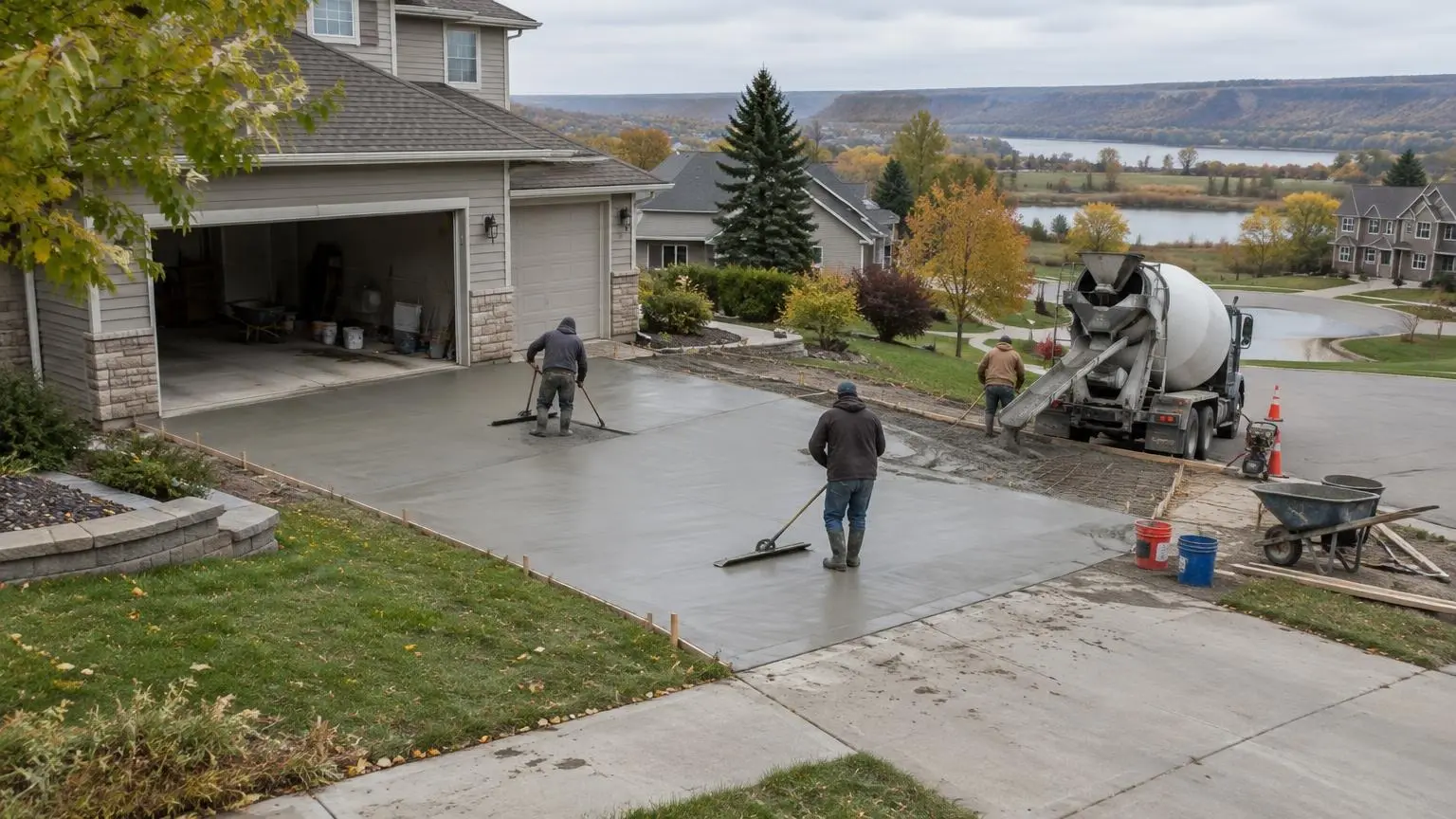
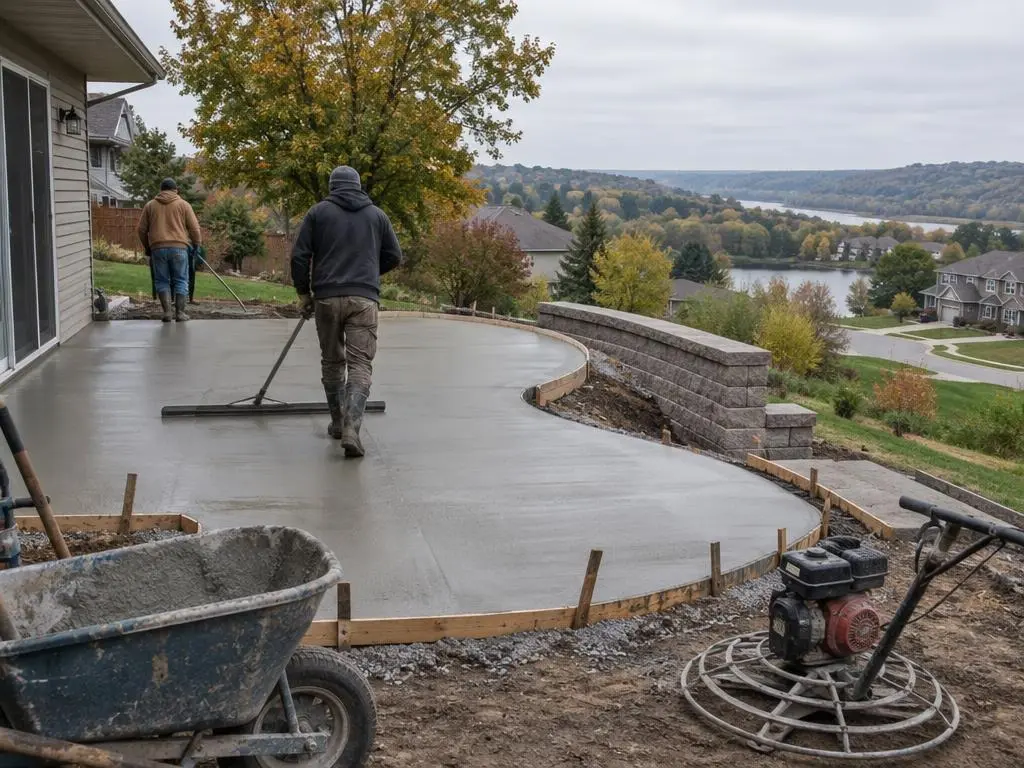
Stamped concrete starts as an ordinary slab. While it is still plastic, we color it and press textured mats into the surface so it takes on the look of slate, flagstone, cobblestone, brick or wood plank. Around Eden Prairie the usual spots are backyard patios, front walks and stoops, and a decorative border along a plain driveway. You get the appearance of laid stone in a single slab, with no gaps between pieces for weeds or ants.
The stamping process, step by step
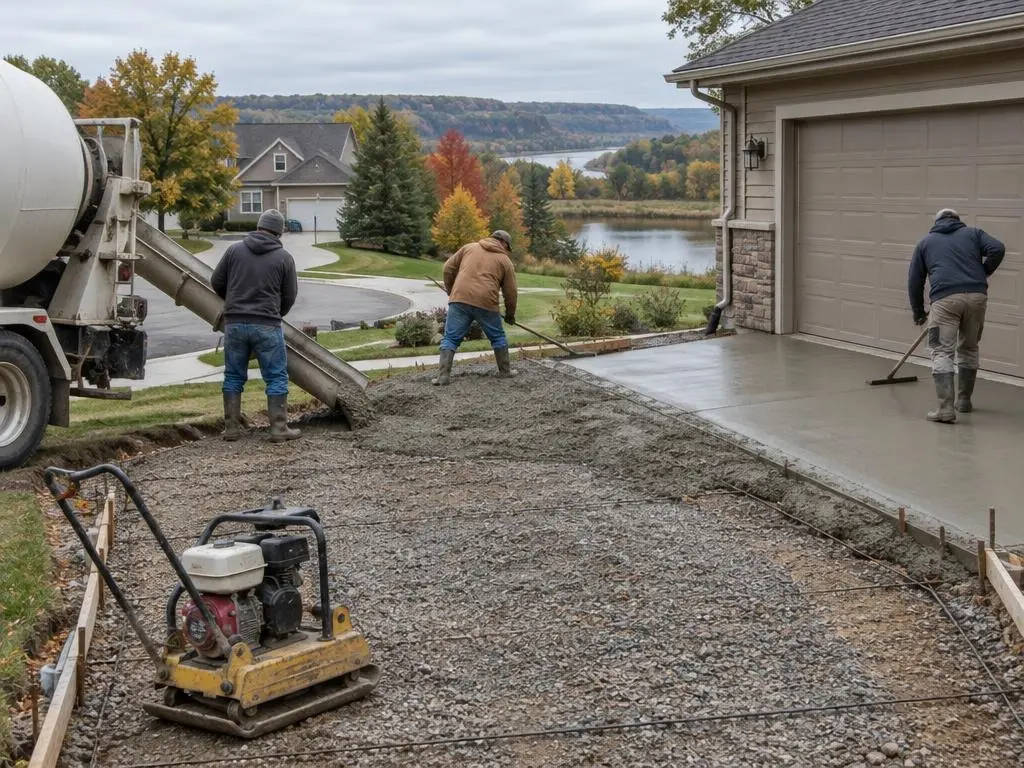
Underneath, it is built like any other patio or walk: excavation, a compacted base, forms, steel and an air-entrained mix. The decorative steps happen in the first hour or two after placement.
Base color. Pigment goes into the truck, gets dusted onto the fresh surface as a color hardener, or both. This sets the main stone tone.
Release. A powder or liquid release in a contrasting shade is applied next. It stops the mats from sticking and collects in the recesses, which gives the joints and texture an aged look.
Imprinting. The mats go down in a set order and are tamped in. Timing is everything. Start too soon and the texture sags; wait too long and the surface won't take the pattern. Edges and corners are textured by hand.
Joints. A stamped slab still needs control joints, and we line them up with the pattern's grout lines wherever possible.
Rinse and seal. A few days later the excess release is washed off and sealer goes on. It deepens the color and shields the surface.
How stamped concrete handles freeze-thaw
A textured surface holds more water than a broom finish, and the sealer is a bigger part of its protection, so stamped work is a bit more vulnerable to winter. HomeGuide's stamped patio guide gives it a 25 to 50 year life depending on how well it is resealed and maintained, and notes it lasts longer in places where the ground doesn't freeze. Here that means:
- Air-entrained concrete with no exceptions
- A fresh coat of sealer every 2 to 3 years, as HomeGuide advises
- No de-icing salt in the first winter, and very little or none in later winters on decorative areas
- Grit mixed into the sealer on steps and walks used in winter
Where stamped concrete makes sense
- Backyard patios: the most common use, where it gets summer traffic and little winter salt.
- Front walks and stoops: good curb appeal, with grip added to the sealer.
- Driveway borders and aprons: a patterned strip along the sides or at the curb dresses up a gray drive without stamping all of it.
- Around fire pits and seating areas: a stone look with no loose pieces.
We are more cautious about stamping an entire driveway in Minnesota. Plows, salt and tire traffic wear the sealer faster, and a fully stamped driveway needs more frequent resealing to keep its color.
Choosing pattern and color
On most Eden Prairie homes, a large slate or flagstone pattern in an earth-tone base reads well and hides dirt. Brick and cobble work best as borders. Lighter colors stay cooler underfoot in July, while darker ones show salt residue and fade sooner. We bring color and texture samples to the site visit so you can hold them up next to your siding and roof.
Caring for stamped concrete
Sweep it and rinse it every couple of months during the season. Reseal every 2 to 3 years, or when water stops beading. Use a plastic shovel on stamped steps and walks. If the sealer turns cloudy or white, it can usually be refreshed without stripping.
What a Stamped Job Includes
Stamped concrete adds color, pattern and sealer to a standard slab build.
Slab build
Dig-out, compacted gravel, forms, steel and an air-entrained mix.
Integral or broadcast color
The base color mixed in or applied as a hardener to the fresh surface.
Release and accent color
A contrasting tone that collects in the texture and joint lines.
Pattern stamping and hand detailing
Mats pressed in sequence, with edges and corners finished by hand.
Sealer
A decorative sealer applied after cleanup, with grip additive where needed.
Typical Stamped Concrete Costs
| Stamped concrete | Published range |
|---|---|
| Basic (one pattern, one color), per sq ft | $8 to $13 |
| Mid-range (two or more colors, border), per sq ft | $13 to $19 |
| High-end (multi-color, custom designs), per sq ft | $19 to $26+ |
| Patio, 16' x 16' (256 sq ft) | $2,000 to $4,850 |
| Patio, 20' x 20' (400 sq ft) | $3,200 to $7,600 |
| Walkway, 4' x 20' (80 sq ft) | $800 to $1,700 |
| Sealing, per sq ft | $1 to $3 |
National ranges from HomeGuide's stamped concrete patio cost guide. Prices in the Twin Cities can differ, and site access, slope, tear-out and finish all change the total. Your written estimate is the price.
How It Works
1. Choose the look
We bring pattern and color samples and agree on layout, borders and joint placement.
2. Build the slab
Base, forms and reinforcement are set just as for any slab.
3. Pour, color and stamp
Concrete is placed, colored, stamped and detailed while it is workable.
4. Wash and seal
A few days later the release is rinsed off and the sealer goes on.
Stamped Concrete Questions
How much does stamped concrete cost?
HomeGuide's stamped patio guide puts most stamped work at about $8 to $19 per square foot nationally: $8 to $13 for one pattern in one color, rising to $19 to $26 or more for multi-color custom designs. On those numbers a 16 by 16 foot stamped patio comes to roughly $2,000 to $4,850.
Does stamped concrete crack in Minnesota?
Any slab can crack. Planned joints, a firm base and steel keep the cracks straight and where we want them, and on stamped work we tuck the joints into the pattern. Air-entrained concrete and regular resealing guard the surface against freeze-thaw flaking.
Is stamped concrete slippery?
Sealed stamped concrete can get slick when it is wet or icy. Adding grit to the sealer improves footing, and we suggest it for any walk or steps.
How often does stamped concrete need resealing?
HomeGuide suggests every 2 to 3 years. With snow and road salt in the picture, watch the busiest areas and recoat once water stops beading on the surface.
Stamped concrete or pavers?
In HomeGuide's stamped patio guide, stamped concrete runs about $8 to $19 per square foot and a paver patio about $10 to $17. Stamped concrete has no seams for weeds to grow in. Pavers can be lifted and reset if a section sinks. Either works here when the base is built right.
Stamped Concrete Service Areas
- Concrete Contractors in Eden Prairie, MN
- Concrete Contractors in Minnetonka, MN
- Concrete Contractors in Chanhassen, MN
- Concrete Contractors in Edina, MN
- Concrete Contractors in Bloomington, MN
- Concrete Contractors in Hopkins, MN
- Concrete Contractors in St. Louis Park, MN
- Concrete Contractors in Richfield, MN
- Concrete Contractors in Golden Valley, MN
- Concrete Contractors in Plymouth, MN
- Concrete Contractors in Shakopee, MN
- Concrete Contractors in Savage, MN
- Concrete Contractors in Prior Lake, MN
- Concrete Contractors in Burnsville, MN
- Concrete Contractors in Chaska, MN
- Concrete Contractors in Victoria, MN
- Concrete Contractors in Carver, MN
- Concrete Contractors in Waconia, MN
- Concrete Contractors in Eagan, MN
- Concrete Contractors in Wayzata, MN
- Concrete Contractors in Shorewood, MN
- Concrete Contractors in Excelsior, MN
- Concrete Contractors in Mound, MN
Get a Stamped Concrete Estimate
See pattern and color samples at a free estimate in Eden Prairie. Call [PHONE].